

I will tell you the truth about my Blackstone 28 inch Omnivore griddle before I tell you anything else. I love the thing. Sofia and Marco ask for smash burger Saturdays by name now, and Bev has stopped bringing her own eggs because she trusts the flat top more than my kitchen stove. But there is a stretch of things nobody mentioned to me before I ordered it, from the two hours Ray and I spent wrestling with the hardware bag to a rust bloom that showed up under the lid the one week I got lazy about the cover. This is the review I wish someone had written for me.
My gas grill has sat on the back deck for years and my charcoal kettle even longer, so I was not exactly new to cooking outdoors, just new to the flat top itself. I ordered the Blackstone because Paul kept describing the fajita nights the guys at his gym were doing on theirs, and because the reviews on this particular griddle looked solid at the size we wanted. What I got was a machine that cooks beautifully and a box of parts that tested my patience before it ever touched a burger.
I am not writing this to talk you out of it. I am writing it because I read a dozen glowing reviews before I ordered mine and not one of them mentioned a stripped bolt, a rust freckle, or the fact that pancake batter can jam a drainage channel in under a minute. Those things did not ruin my experience, but they would have saved me an afternoon or two if I had known to expect them.
The Quick Verdict
A genuinely great flat top once it is together and seasoned, but the assembly hardware, rust risk without a cover, and uneven heat zones are real and worth knowing before you buy.
Amazon Check Today's Price →Skip the guesswork. Here is the griddle that earned a permanent spot on our patio.
The Blackstone 1517 Omnivore griddle is the one we actually use every week. Check today's price and current stock on Amazon before you decide.
Amazon Check Today's Price on Amazon →How I've Used It
I've had the Blackstone parked on the same stretch of pavers since April, and it has become the tool I reach for more than either the gas grill or the kettle. Weeknight quesadillas, Sunday morning pancakes for Sofia and Marco, Bev's fajita night when she is short on time before her shift, the volume of meals this griddle has handled is not in question.
What I want to walk you through here is not how good the food tastes, because it tastes great, and you can read about that side of it in our long-term Blackstone review. What I want to cover is the ownership stuff that never shows up in the marketing photos, the parts I had to learn the hard way.
This review leans on the messiest, most demanding stretches of that time, the big group cooks, the mornings I was rushed, the weeks I was traveling and Ray was handling it solo. Those are the conditions that actually reveal a piece of equipment's rough edges, not a quiet weeknight with two eggs and nobody watching the clock.
The Assembly Box Nobody Warns You About
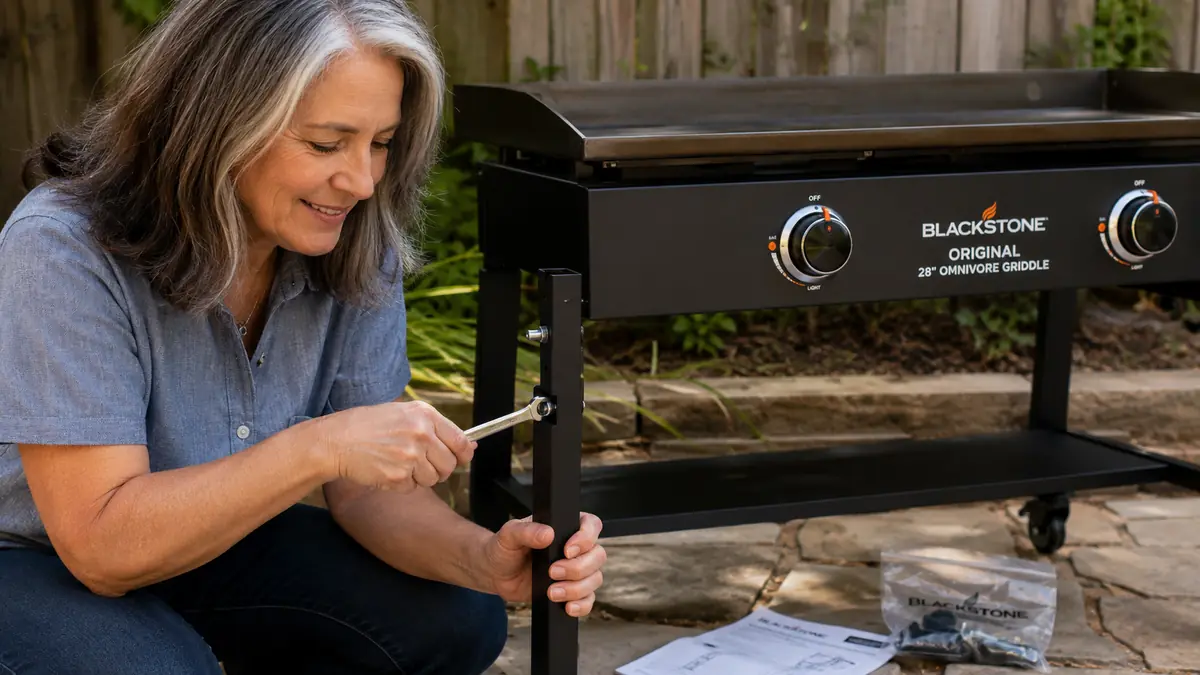
Ray and I set aside twenty minutes for assembly because that is roughly what the listing implied. It took us just under two hours, and Ray has put together far more complicated equipment than a griddle cart back in his sound engineer days. The instructions themselves are workable. The hardware bag is the real issue. Several of the bolts on our unit had shallow threads that stripped if you did not seat them dead straight on the first try, and one of the caster wheel screws needed a dab of thread locker before it stopped backing out over the following weeks of rolling the cart in and out of the garage.
None of this kept the griddle from working once it was together. It is a patience problem, not a functional one. But if you are ordering this expecting a thirty minute job, budget closer to ninety minutes to two hours, grab a second set of hands, and recheck every visible bolt after the first week or two of use once the cart has gone through some heat cycling and vibration from being wheeled around.
One thing that helped was laying every bolt, washer, and bracket out on a towel in the order the instructions listed them before touching a single screwdriver. We lost twenty minutes doing that step and it saved us from backtracking twice, which is where most of our original assembly delay came from the first time we tried to skip ahead.
The Rust Problem If You Skip the Cover
About six weeks in, during a stretch of unusually damp mornings when I was traveling and Ray was on his own with the cooking, the cover stayed off for four or five nights in a row. When I got back, there was a faint rust bloom starting along the underside of the lid hinge and a few freckles of it near the back grease trough where moisture likes to sit. It was not catastrophic, a scrub with a fine steel pad and a fresh coat of oil took care of it, but it rattled me. I had assumed the coating would protect it longer than that.
Here is the honest math. The Blackstone plate is cold rolled steel, not stainless, which is part of why it holds heat and builds a seasoning layer so well. That same steel will rust if it sits wet and uncovered, full stop. A fitted cover is not optional gear here, it is part of the actual ownership cost, and if your patio does not have any overhang, plan on covering it every single time, not just when rain is in the forecast.
Since that scare, I do a quick wipe with a paper towel and a light coat of oil after every cook, then the cover goes on before I even bring the plates inside. It takes ninety seconds and it has kept the rust from coming back, but it is a habit I had to build on purpose, not one the griddle prompts you to form on its own.
The Grease Cup Mess and the Back-Drainage Design
The rear grease management system sounds tidy on paper. Grease and food debris drain toward the back of the plate, through a channel, down into a removable cup. In practice, it works well for thin liquid grease from bacon or burgers. It works far worse for anything with solids in it. The first time Marco helped me make pancakes and a good amount of batter ended up on the plate, the drainage channel clogged almost immediately, and grease backed up and started dripping off the side of the cart onto the pavers instead of into the cup where it belonged.
Cleaning the trough itself is a genuinely greasy job, not a wipe and go. I keep a stack of paper towels and a putty scraper specifically for that channel now, and I clear it mid-cook if I am doing anything heavier than eggs. The cup itself is small enough that a big group cook, think Bev's fajita night for eight, fills it faster than you would expect, and an overflowing cup means grease pooling under the cart instead of catching it cleanly.
I now line the cup with a bit of foil before big cooks, which turns emptying it into a fold-and-toss job instead of a scrub job, and I check it halfway through any cook for six or more people. It is a small extra step, but skipping it once, at Bev's request for a full fajita spread, was enough to teach me to never skip it again.
Uneven Heat Zones Across the Plate
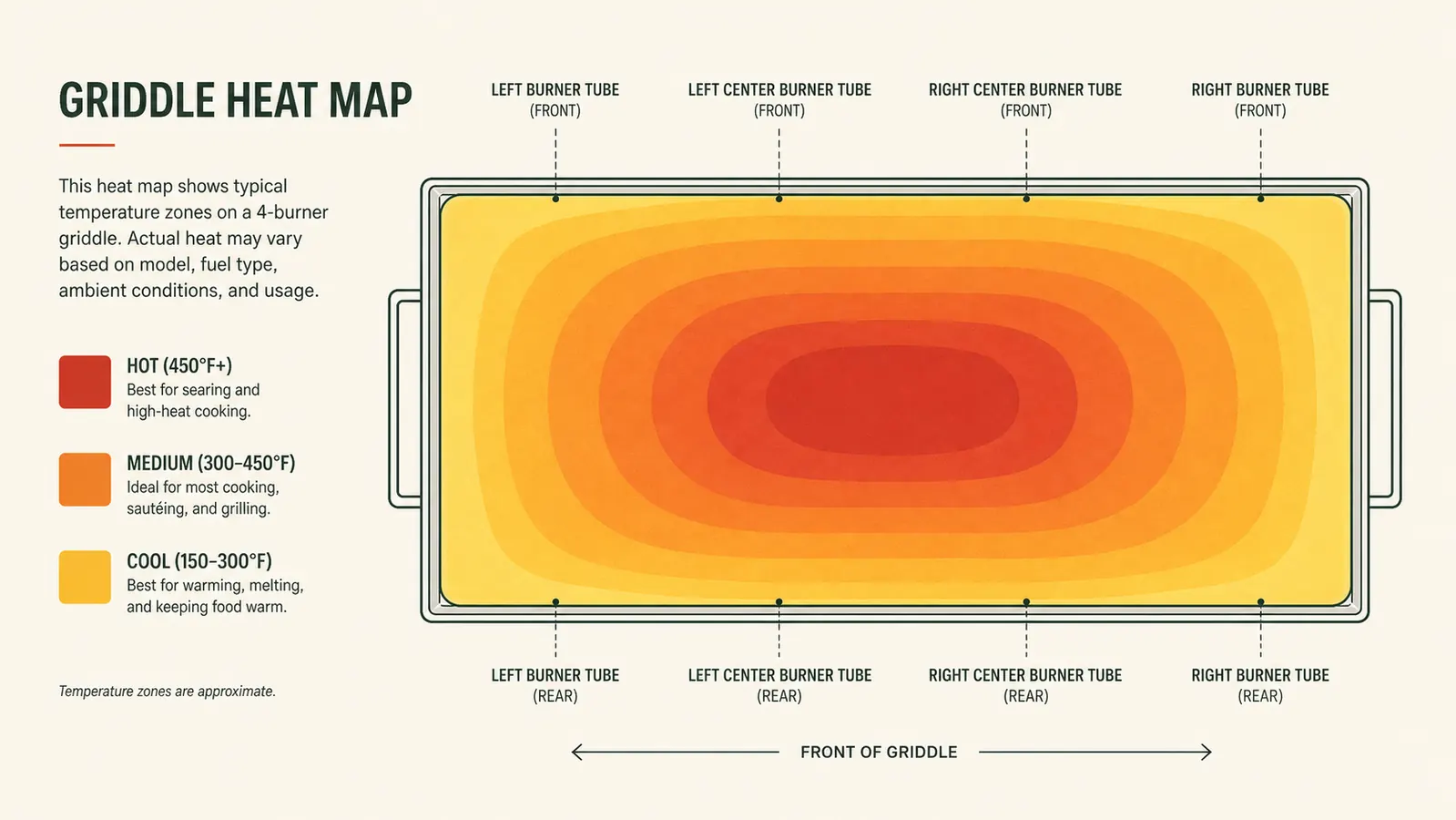
This is the one that took me the longest to work around. The center of the plate, directly over the middle burner tubes, runs noticeably hotter than the corners and the far edges. On a cold start, the temperature difference between the hottest spot and the coolest corner can be well over a hundred degrees for the first several minutes. I learned this the annoying way, by putting hash browns in the corner while eggs cooked in the center and wondering why the potatoes were still pale twenty minutes later.
Once I understood the layout, it stopped being a problem and started being useful. I now treat the plate like zones on a stovetop, searing near the middle, holding finished food on the cooler edges, and starting delicate things like pancakes slightly off-center rather than dead in the hottest spot. It just took a season of trial and error to get there, and the manual does not explain this clearly.
A cheap infrared thermometer solved most of my remaining guesswork. I point it at four spots before a big cook now, center, both back corners, and the front edge, and I plan the meal around whatever the readings tell me that day rather than trusting the layout to be identical every single time, because it is not.
Wind, Storage Footprint, and the Warping Complaints
We get real gusts up here in the hills some evenings, and I noticed early on that a stiff crosswind can knock down the flame on the burners closest to the edge, especially with the lid up. It does not go out entirely most of the time, but the heat drops and cook times stretch. If your patio is exposed rather than tucked against the house, plan to position the cart with its back to the wind, or you will spend more time relighting burners than you expect.
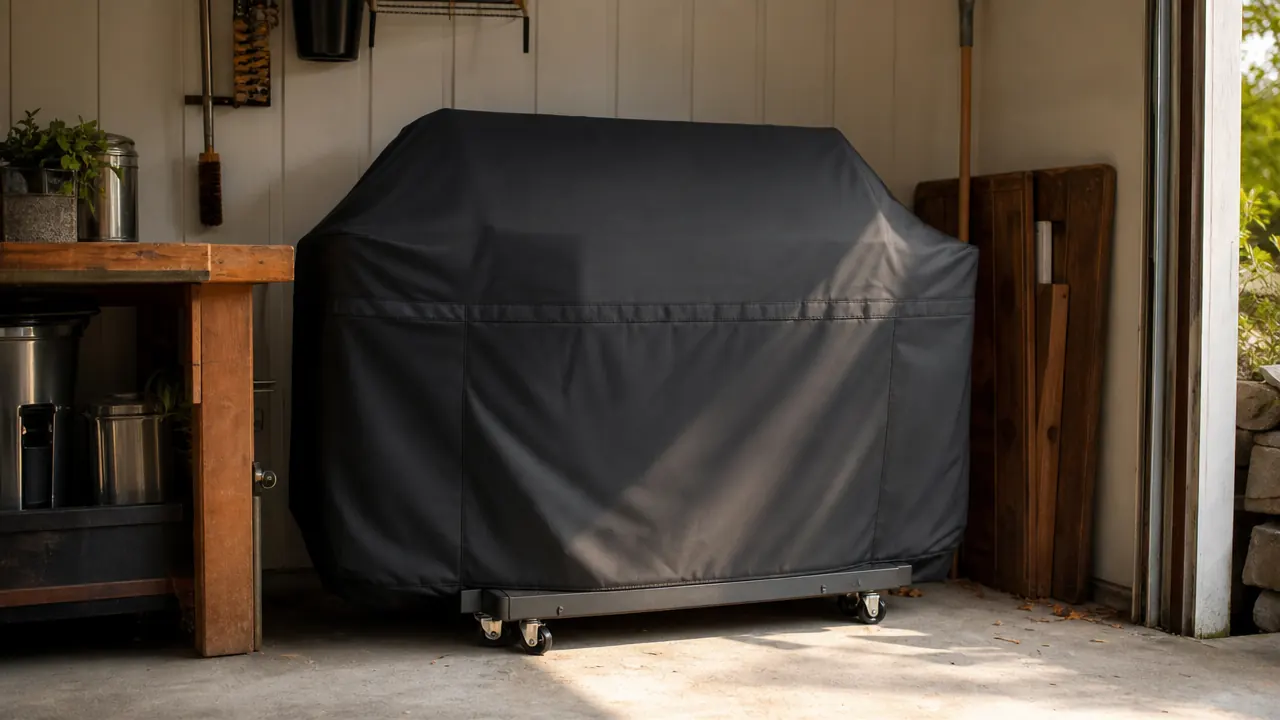
The 28 inch model is also bigger than photos make it look. With the side shelves up, it takes a real footprint, close to five feet wide, and it needs a spot to live between cooks. Ours lives against the garage wall under its cover, which works, but if you are tight on patio or garage space, measure twice before you order the 28 inch size instead of the smaller version.
I also went looking online for the warping complaints people mention, because I had read a few before buying. My plate has not warped after six months of regular use, but I run it on medium rather than cranking every burner to high for long stretches, and I always let it cool before hosing it down. The complaints I found mostly traced back to blasting the plate at max heat empty for long preheats or hitting a hot surface with cold water right after cooking. Both are avoidable if you know to avoid them, which is exactly the kind of thing nobody tells you up front.
The one adjustment I would still make is folding the side shelves down whenever wind picks up mid-cook, even if it means less counter space for plates. A gust catching a full shelf of ingredients has knocked a bowl of eggs off my griddle once already, and I would rather juggle bowls in my hands than clean raw egg off the pavers a second time.
What We Liked
- Cooks a large volume of food fast and evenly once you learn the zones
- Rear grease system genuinely works for thin grease when kept clear
- Builds a durable, low-stick seasoning layer with regular use
- Steel plate holds heat well for smash burgers and searing
Where It Falls Short
- Assembly hardware can strip if you do not seat bolts carefully
- Will rust without a cover and consistent drying, no exceptions
- Grease trough clogs on anything with solids and needs mid-cook clearing
- Noticeable hot center versus cooler edges takes a season to learn
- Large footprint and wind sensitivity on exposed patios
Nobody told me the griddle would need a season of trial and error before it stopped surprising me. Once it did, it earned its spot.
Who This Is For
If you cook for a crowd regularly, the way I do most Sundays with Bev and whoever else Ray has invited over, this griddle earns its keep fast. It is also a good fit if you are willing to treat it like real equipment, meaning a cover every time, a scraper for the grease channel, and a bit of patience while you learn where the plate runs hot.
It also suits anyone replacing a smaller stovetop griddle or a crowded charcoal kettle for breakfast duty. Once you get past the learning curve, it genuinely covers more ground per cook than either of my other two pieces of equipment, and cleanup, once you have the rhythm down, is faster than scrubbing my kettle's grates.
Who Should Skip It
If you want something you can assemble in twenty minutes, leave uncovered without worry, and never think about again between cooks, this is not that product. Anyone cooking for one or two people who mostly wants quick weeknight meals may be better served by a smaller griddle or a good cast iron pan on the existing grill.
It is also worth a pass if your outdoor space has no covered spot at all and you know yourself well enough to admit the cover will not go on consistently. Rust is preventable, but only with a habit you actually keep, and there is no shame in choosing a lower-maintenance piece of equipment instead.
Still worth it, with your eyes open. See current availability.
Knowing what to expect changes everything about ownership. Check today's price on the Blackstone 1517 Omnivore griddle and see what's currently in stock.
Amazon Check Today's Price on Amazon →