
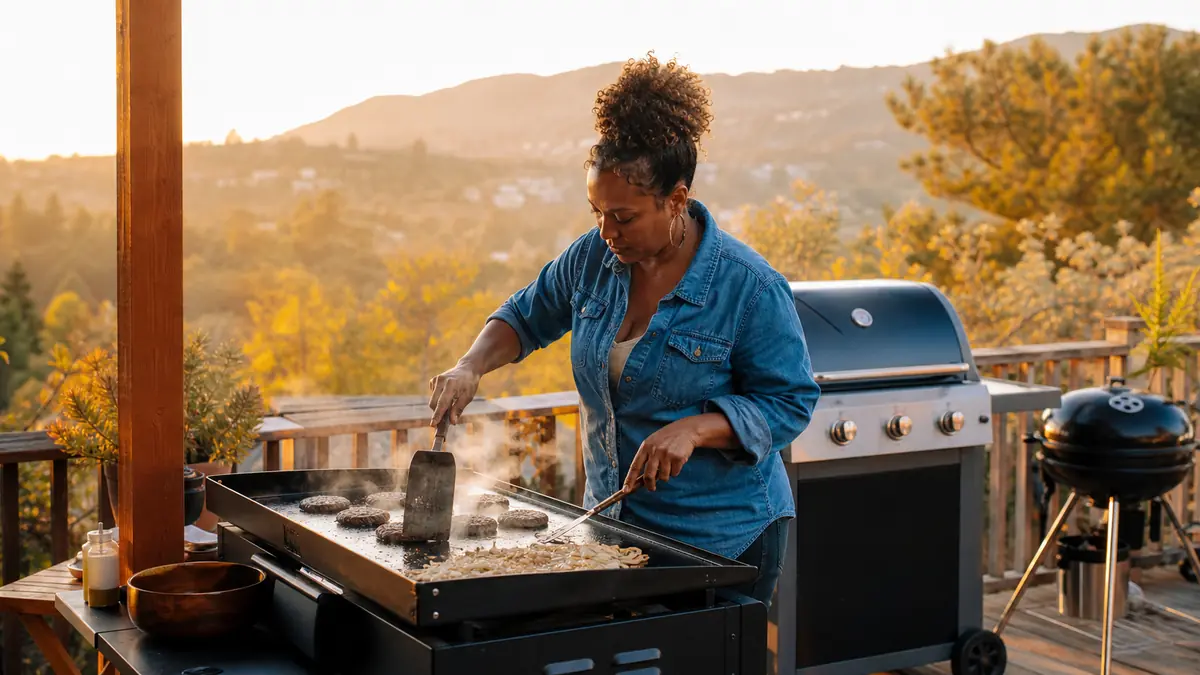
Ray and I have cooked off the same three burner gas grill on our back deck for almost fifteen years, and my charcoal kettle has been sitting next to it even longer, closer to twenty now. I did not think I needed anything else out there. Then two summers ago we went camping up near Lake Tahoe with six other couples, and one of the guys pulled a Blackstone 1517 Original 28 inch Omnivore Griddle out of the back of his truck at the campsite. By the second morning nearly everyone in camp was hovering around that flat top instead of the fire pit, and I drove home and ordered one of my own before the week was out.
Two summers later, the Blackstone still lives on the deck alongside the gas grill and the kettle. It did not replace either one. I reach for it for the things it does better than anything else I own: smash burgers on a Saturday, pancake mornings when Sofia and Marco sleep over, fried rice for a full table, and the kind of big breakfast spread that keeps Bev talking until noon. This review is what a season and a half of regular use, in real Bay Area weather, actually taught me about living with a Blackstone griddle.
The Quick Verdict
A genuinely useful third cooking surface for breakfast, smash burgers, and feeding a crowd, but it demands real seasoning discipline and a cover if you want it to last.
Amazon Check Today's Price →Tired of cooking breakfast for a crowd in batches?
This is the griddle that finally let me get eggs, bacon, hash browns, and pancakes done at the same time, on the same surface. Check today's price and see if it's in stock before your next big Sunday.
Amazon Check Today's Price on Amazon →How I've Used It
Assembly took Ray and me about forty five minutes on a Saturday morning, working through the numbered instructions without hunting for a missing bolt. The legs, shelves, and grease cup bolt onto the cooking surface and hood, and every bolt matters if you want the whole unit to sit level, because a griddle that leans even slightly will pool grease and oil toward one corner instead of draining it where it should go. Once it was together, the Blackstone rolled into position on its locking casters and has barely moved since.
The Blackstone runs on propane, the same tanks Ray uses to refill our regular grill, which was one of the reasons I liked it in the first place. I do not have to keep a second fuel type around. A full twenty pound tank has carried us through roughly six to seven weeks of our normal cooking rhythm, two or three cooks a week, most of them twenty to thirty minutes long across the 470 square inch surface. Camping trips burn through propane faster because we tend to run both H-style burners hotter and longer for group breakfasts, so I always bring a spare tank when we travel with it.
By the numbers, I have put the Blackstone through somewhere around eighty cooks since we brought it home, everything from Tuesday night quesadillas to a Fourth of July spread for fourteen people. That is more use than I expected to give it when I bought it half on impulse after that camping trip. It has become the surface I reach for anytime I am cooking for more than four people, because a flat top handles volume in a way the kettle and the three burner grill just cannot.
Seasoning and Rust, the Real Long-Term Test
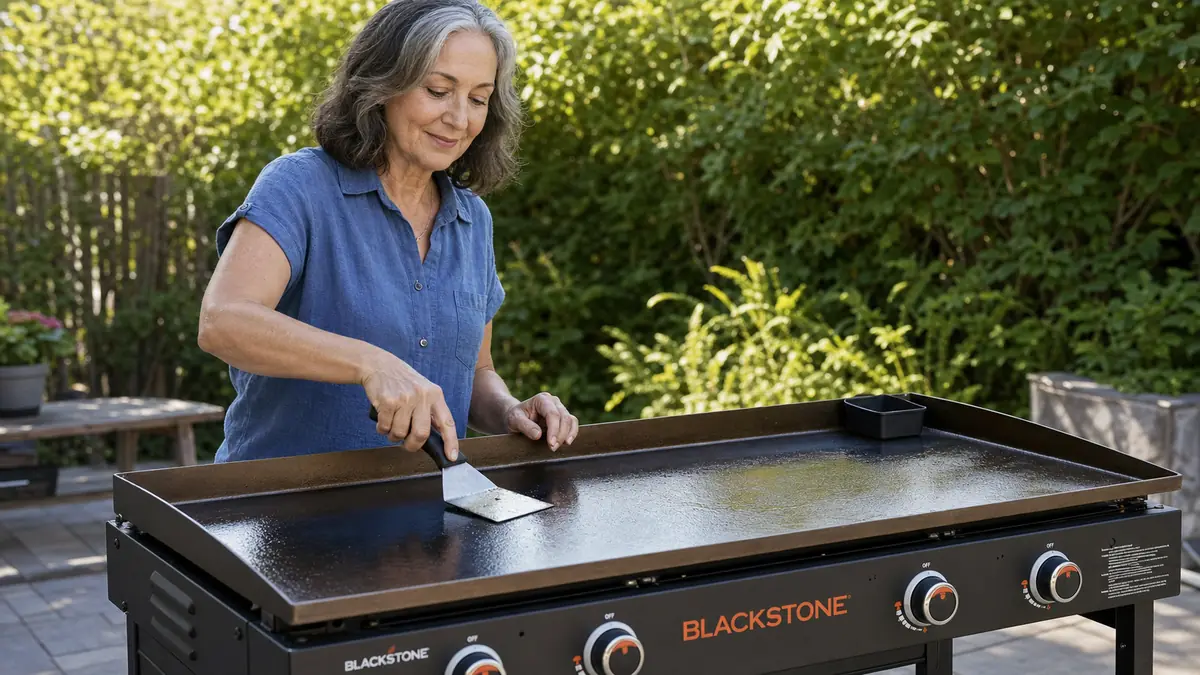
The griddle top is cold rolled steel, roughly 3/16 inch thick, not stainless and not nonstick coated, so seasoning is not optional, it is the whole game. Blackstone ships the surface with a light protective coating that has to be scrubbed off with soap and water before the first cook, which surprised me, since everything else about grilling gear tells you never to use soap on cast iron or steel. After that first wash, I did four thin coats of oil over about an hour, heating the surface until it smoked and wiped down, then repeating. I keep the full step by step process written down for anyone new to it, but the short version is thin coats, real smoke, and patience.
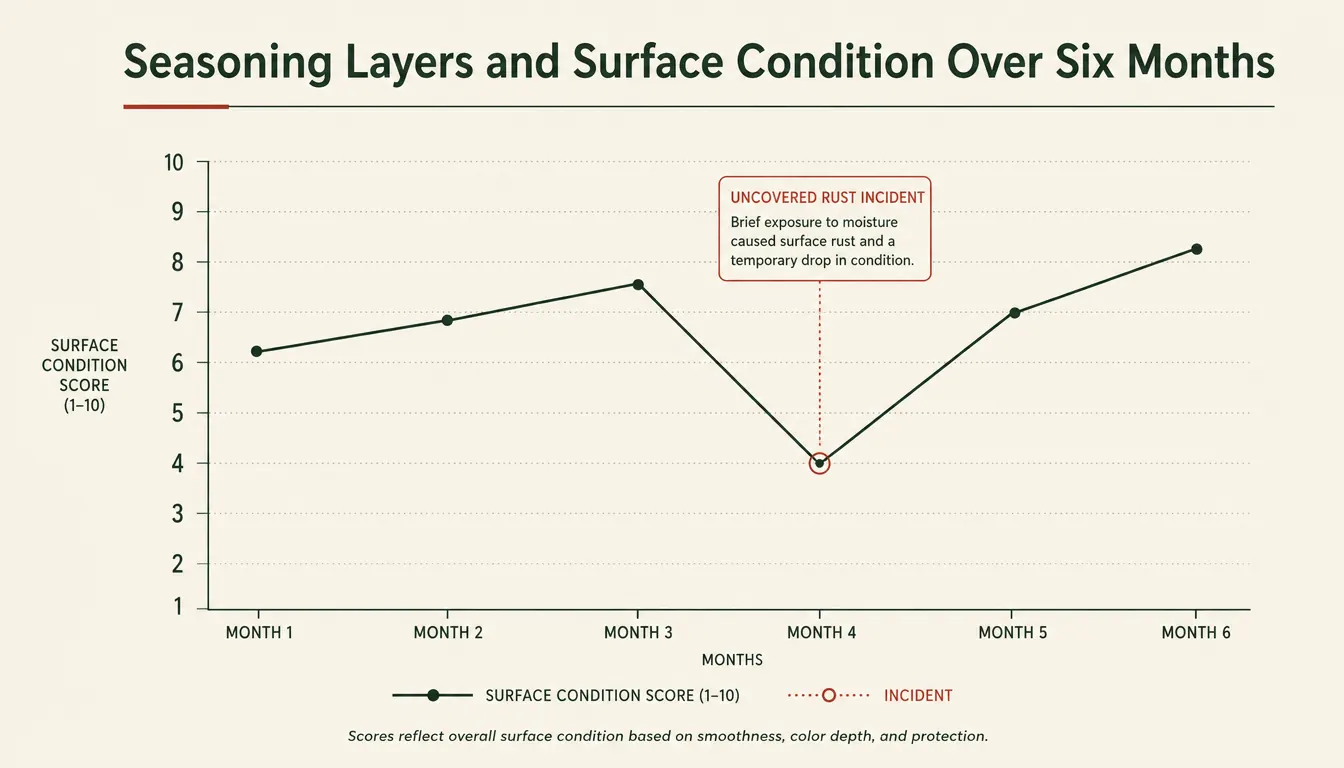
Rust is the real long term risk with a Blackstone, and I will be honest that I lost the seasoning on one back corner during our first winter because I left it uncovered through two weeks of East Bay fog and rain. A patch of surface rust showed up, nothing dramatic, but it meant re-scrubbing that section back to bare metal and re-seasoning it from scratch. Since then the griddle wears a fitted cover every single night it is not in use, rain or shine, and I have not had a repeat of that problem in over a year.
My after-cook routine is short: scrape the surface with the metal spatula while it is still warm, wipe with a paper towel, run a thin film of oil across the whole top, and let it cool before covering it. That takes maybe five minutes and it is the single habit that has kept the Blackstone performing the way it did on day one. Skip it even a few times in a row and you can feel the surface start to grab food instead of releasing it.
Smash Burgers, Breakfast Spreads, and What It Actually Cooks Well
Smash burgers are where the Blackstone earns its keep most weeks. The 3/16 inch steel plate holds heat evenly enough that I can smash six patties at once across all 470 square inches without the far side cooling off before I get to it, which used to happen constantly on the gas grill's grates. The Blackstone gets hot enough for a real crust, and because it is a solid surface rather than grates, none of the juices or the seasoning falls through into a flame. Ray still says a burger off the kettle has more smoke flavor, and he is not wrong, but for a weeknight batch for the family, the griddle wins on speed and consistency.
Breakfast is the other place it shines. Pancakes, eggs, bacon, and hash browns all at once, side by side, is not something the gas grill or the kettle can do at all. When Sofia and Marco stay over, I can have a full breakfast for six people done in under twenty minutes because everything cooks at the same time on the same surface instead of in batches. It travels well too. We have taken the Blackstone camping three more times since that first Tahoe trip, and it has become the meeting point at every campsite the same way that borrowed one was.
What it does not do well is anything delicate that needs real airflow, like a whole roasted chicken or ribs that want low indirect heat and smoke. Wind is also a real factor outdoors. On a breezy day the exposed sides of the cooking surface lose heat faster than the center, and I have had uneven cooks on gusty afternoons that would not have been a problem inside a closed grill hood. It is a griddle first, and it does not pretend to replace what the kettle does for low and slow cooking.
I also ended up buying a few accessories I did not plan for at first: a squeeze bottle set for oil and water, a heavier duty metal spatula than the flimsy one that ships in the box, and a proper scraper. None of it costs much, but if you are budgeting for this griddle, factor in a little extra for tools that make it actually pleasant to cook on day to day. The stock accessories work, they are just not built for someone using this a few times a week the way we do.
Grease Management and Cleanup Over Time
The rear grease management system routes drippings toward the back of the cooking surface and down into a removable cup, which sounds simple and mostly works, but it needs a slight forward to back grade to function well, which goes back to leveling it correctly during assembly. On a level patio it drains fine. I empty the grease cup after every big cook, because a full cup on a hot day gets close to overflowing faster than you would think, especially after something greasy like bacon and burgers back to back.
Actual cleanup is fast for something this size. A metal scraper and a splash of water on the still warm surface loosens almost everything, and a paper towel or grill cloth finishes it. The 28 inch surface is genuinely large, big enough that grease can splatter past the edges onto the deck if I am not paying attention to wind direction, so we keep it a few feet off the house siding and away from anything we care about staining.
Storage, Cover, and Weight: The Ownership Tradeoffs
This is not a small appliance. The 28 inch Blackstone weighs close to a hundred pounds assembled, and while it rolls on its locking caster wheels, moving it across gravel or grass takes real effort, not a light push. We picked a permanent spot on the deck for it rather than planning to store it in the garage between uses, which is worth thinking through before you buy, because a griddle you have to wrestle into storage every time is a griddle that starts collecting excuses instead of use.
The cover is not optional in my experience, whatever the marketing photos suggest. Between UV exposure fading the paint and moisture triggering rust on the cooking surface, an uncovered Blackstone left outside through a Bay Area winter will show it within a season, as I learned the hard way with that rusted corner. I bought the fitted cover separately and consider it as essential as the griddle itself. It adds one more thing to remember, snapping it on after the surface has fully cooled, but it is a small habit against a real repair headache.
Alternatives I Considered First
Before buying, I looked hard at a smaller tabletop griddle that would have stored more easily and cost less, and I nearly talked myself into it. I am glad I did not. The 28 inch surface is what actually lets me cook breakfast for six or smash burgers for the whole table in one pass, and a smaller unit would have meant cooking in shifts, which defeats the point for a household that regularly feeds a crowd. I also weighed a wider competitor's flat top, which I compared directly in Blackstone vs Camp Chef: Which Outdoor Griddle Wins, and stuck with the Blackstone for the steel thickness and the simpler grease trough alone.
Cost per cook is really how I think about it now. A griddle like this is a bigger purchase than a spatula set or a thermometer, and I will not pretend otherwise, but two summers in it has replaced take-out breakfast runs, shortened cookout prep time, and turned into the thing every guest ends up standing around. If you are weighing it against a smaller griddle or a dedicated smoker, check today's price before deciding, because Blackstone runs sales often enough that waiting a few weeks can matter more than the model year does.
What We Liked
- 470 square inch surface cooks a full breakfast for six people at once
- Runs on the same propane tanks as a standard gas grill
- Rear grease management system keeps cleanup fast once the cart is leveled
- 3/16 inch steel handles smash burgers and camping cooking better than grates ever did
- Locking casters make it easy to reposition on the patio
Where It Falls Short
- Cold rolled steel surface rusts within one season if left uncovered
- Close to a hundred pounds assembled, not something you casually move to the garage
- Wind affects even heating on the exposed sides more than a closed grill would
- Not suited to low and slow, indirect cooks like ribs or a whole chicken
- Initial seasoning and ongoing oil maintenance is a real, non-optional chore
The griddle did not replace the grill or the kettle. It just became the surface I reach for anytime I am cooking for more than four people.
Who This Is For
The Blackstone makes the most sense for anyone who regularly cooks for a group, whether that is a standing Sunday tradition like ours with Bev at the table or a house that fills up with grandkids on weekends. If breakfast spreads, smash burgers, or camping trips are a regular part of your cooking life, the 28 inch surface pays for itself in how much faster you can feed people. It is also a good fit if you already own propane tanks for another grill and do not want to manage a second fuel source.
Who Should Skip It
If you live somewhere with limited outdoor storage, or you know yourself well enough to admit a cover will not go on every night, I would think twice. The rust risk is real and it is the single biggest regret I hear from other owners. Anyone who mostly cooks for one or two people, or who is drawn to it for smoking and slow cooks rather than griddle food, will likely be happier with a smaller flat top or sticking with a dedicated smoker instead of this one.
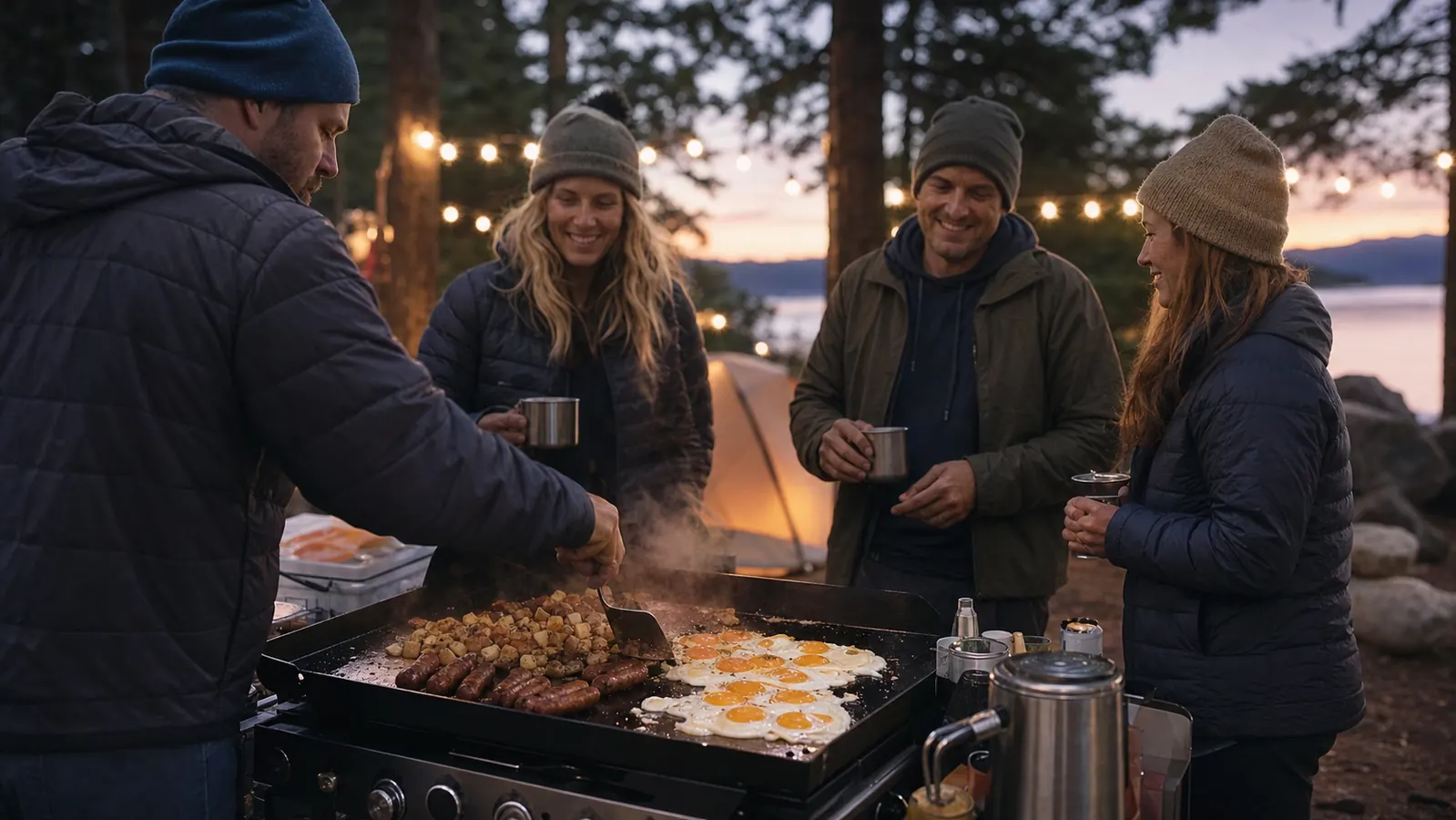
A season and a half in, this griddle still gets used weekly.
If Sunday breakfasts and smash burger nights keep piling up faster than your current grill can keep up, this is worth checking out. See today's price before your next gathering.
Amazon Check Today's Price on Amazon →