
I get asked this more than almost anything else: how do I pick wood pellets for smoking when the shelf at the hardware store has ten bags that all say something like "bold" or "savory" on the front? For years I grabbed whatever was cheapest and closest to the door, and my food tasted like it. Once I actually paid attention to what I was buying, the difference in flavor was not subtle. My go-to now is Traeger Signature Blend, a hickory, maple, and cherry mix that gives me a clean, well-rounded smoke without overpowering a simple weeknight chicken or a Sunday brisket for Ray, Nina, Paul, and the grandkids.
I should say upfront, I don't own a dedicated pellet grill. I run a three-burner gas grill on the back deck and a charcoal kettle I have had for twenty years. What I do own is a smoker tube that I fill with wood pellets and set right on the grate, and every so often I borrow my son-in-law Paul's pellet smoker for a bigger cook. If that sounds like your setup too, or you're shopping for your first bag of pellets period, this is the process I actually use before anything goes in the cart.
Start with a blend that works for almost everything you smoke
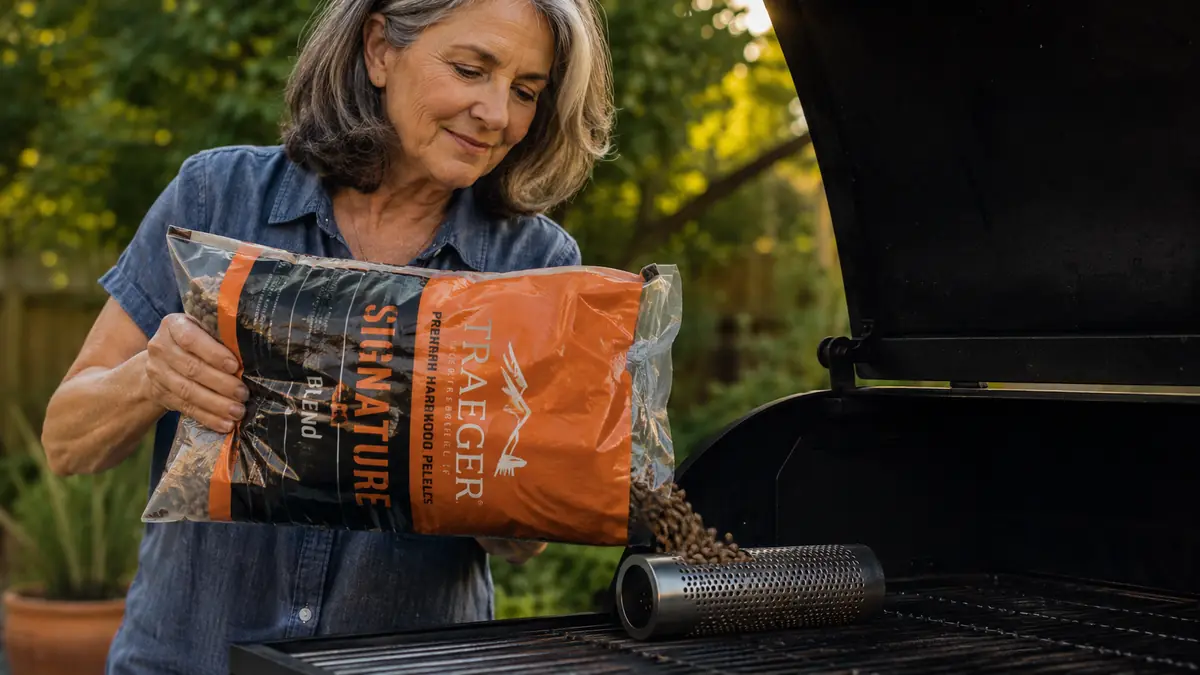
Traeger Signature Blend gives you hickory, maple, and cherry in one bag, which covers the vast majority of what most backyard cooks make in a week. It's the bag I keep stocked so I never have to think twice before a Sunday cook.
Amazon Check Today's Price on Amazon →Step 1: Match the Wood to What You're Actually Smoking
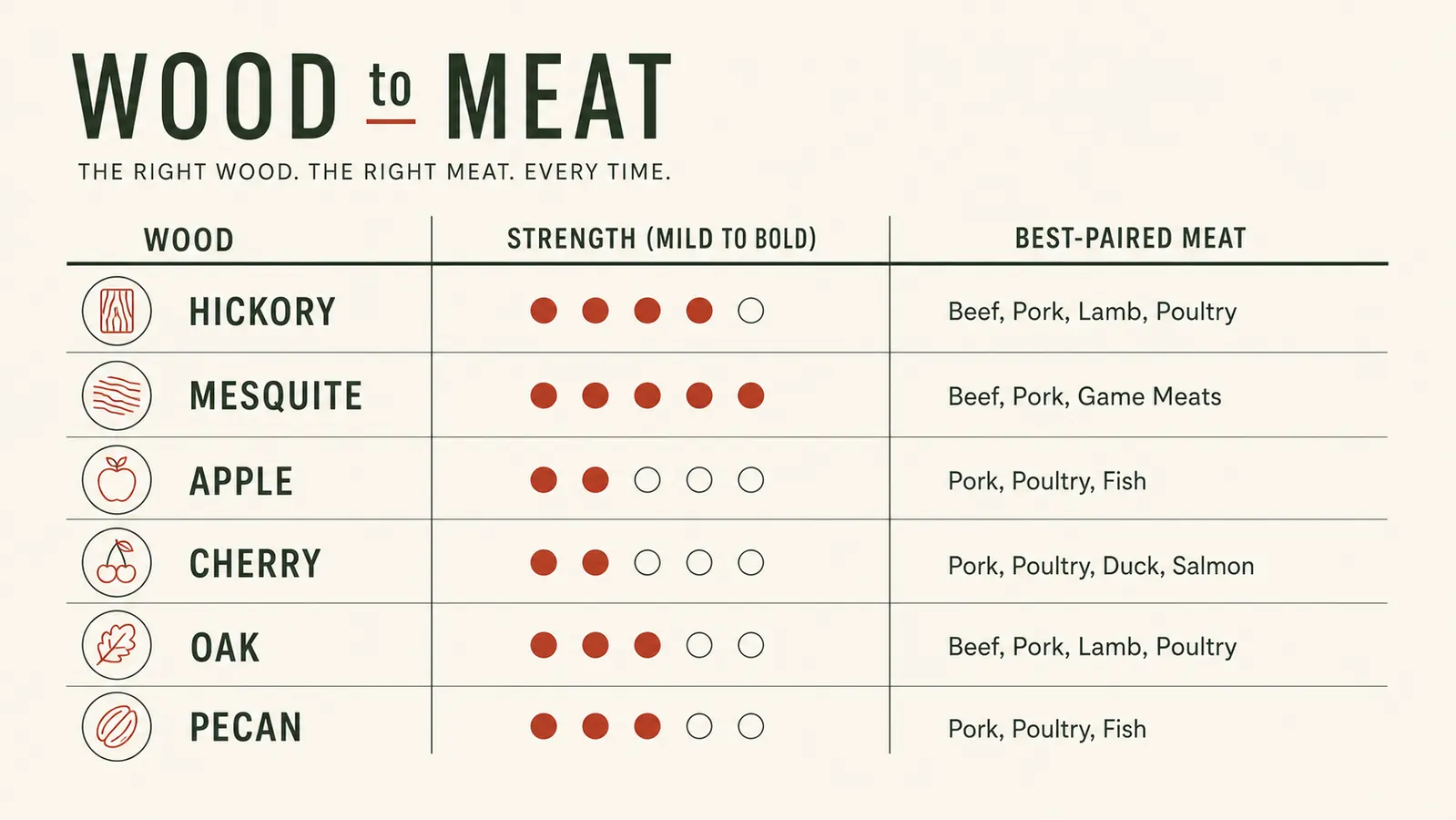
This is the step people skip, and it's the one that matters most. Wood pellets fall on a spectrum from mild to bold, and pairing the wrong end of that spectrum with delicate meat is how you end up with something that tastes like an ashtray. Hickory and mesquite are the boldest, strong enough to stand up to pork shoulder, beef ribs, and brisket. Oak sits in the middle, sturdy and slightly sweet, and it's my default when I'm not sure what else to reach for. Apple and cherry are the mild, fruity woods, best on chicken, turkey, and fish, where you want a whisper of smoke, not a wall of it. Pecan lands close to hickory but rounder and nuttier, which makes it a nice middle ground for pork ribs.
Here's how that plays out on my deck. When I'm smoking a pork shoulder for a crowd, I want hickory or oak doing the heavy lifting because that cook runs six to eight hours and the meat can take it. When Marco and Sofia are coming over and I know chicken thighs are the safer bet with kids at the table, I switch to apple or cherry so the smoke stays gentle. Brisket is where a blend earns its keep, because a mix like hickory, maple, and cherry gives you boldness without the harshness straight mesquite can bring on a long cook.
Cherry deserves a special mention because it does something the other woods don't, it colors the bark a deep mahogany even on cooks that don't run especially long. I lean on it whenever I want food to look as good as it tastes for company, ribs especially. Pecan is my quiet favorite for a Sunday pork butt when I want something a step gentler than hickory but still savory enough to hold up against a vinegar-based sauce. None of these woods are wrong choices, they're just tools, and the whole point of this guide is learning which tool fits which job.
This is exactly why I keep coming back to Traeger's Signature Blend as my everyday bag. It already does the wood-matching thinking for you, hickory for backbone, maple for a little sweetness, cherry to round off the edges, so it performs well across chicken, pork, and beef without me having to swap bags mid-week. I go into more of what that blend actually tastes like across a full season of cooking in my long-term Traeger pellets review, including how it held up on ribs, a whole chicken, and one very stubborn brisket.
Step 2: Decide How Bold You Actually Want the Smoke Flavor
Once you know your wood family, the next decision is intensity. Straight hickory or straight mesquite in a smoker tube for four hours is a very different experience than the same wood in a blend cut with something milder. If you've been burned before by food that tasted bitter or acrid, the wood probably wasn't wrong, the dose was. Mesquite especially gets a bad reputation because people leave it burning too long or use too much of it on something delicate. Used sparingly on a quick sear or a short cook, it's fantastic. Used for six hours on a pork butt, it can turn harsh.
If you're newer to smoking, I'd rather you start milder than you think you want and adjust upward next time, because you can always add more smoke on the next cook, but you can't take bitterness out of a finished brisket. That's part of why I like starting people off with a blend instead of a single bold wood. It's more forgiving while you're still learning how your particular setup, whether that's a smoker tube, a borrowed pellet smoker, or something built in, actually pushes smoke through the meat.
I learned this one the hard way years ago on a whole chicken, straight mesquite, way too much of it, and the skin came off the grill tasting almost tarry. Nina still brings it up. These days I test any new wood or blend on something small and cheap first, like a couple of drumsticks, before I trust it on a big cut of meat I'm serving to the whole table.
Step 3: Check the Pellet Quality Before You Buy
Not all wood pellets are created equal, even when the bag says "hickory" or "applewood" right on the front. Cheaper pellets are sometimes cut with oak or other filler wood and then sprayed with a flavored oil to fake the taste, rather than actually being made from that wood. You'll notice it in two ways: the smoke flavor tastes flat or artificial, and the pellets tend to leave more ash and gunk in your smoker tube or hopper.
What I look for on the bag is a clear statement that the pellets are 100% natural hardwood with no fillers, binders, or added flavoring oils. Traeger's Signature Blend spells this out right on the label, which is one of the reasons it's the bag I trust enough to buy without reading three pages of reviews first. Good pellets should also feel solid and uniform, not crumbly or dusty when you pour them, since crumbly pellets often mean they've already started absorbing moisture before they ever reached your garage.
It's also worth checking the bag weight against the price before you buy, since some brands quietly shrink the bag size while keeping the sticker price the same. An 18-pound bag should feel heavy and dense in your hands, not light for its size. If a bag feels suspiciously light or the pellets rattle around loosely, that's usually a sign of lower density wood or extra moisture already working its way in.

Step 4: Store Your Wood Pellets Dry, Every Time
This step gets ignored constantly, and it's the fastest way to ruin an otherwise good bag of pellets. Wood pellets are compressed sawdust, and they are built to soak up moisture the second they get the chance. Leave a bag on the garage floor through a damp winter or a foggy week up here in the hills, and the pellets at the bottom will swell, clump, and eventually turn back into something closer to mulch than fuel. Swollen pellets don't feed evenly through a smoker tube, they smolder instead of burning clean, and they can jam an auger on a hopper-fed pellet grill entirely.
The fix is simple and cheap. Once a bag is opened, I transfer what's left into a sealed plastic bin with a tight lid, and I keep it up off the concrete on a shelf rather than directly on the garage floor. If you live somewhere humid, or you only smoke once every few weeks, buy a smaller bag rather than a bulk one, since pellets that sit half-used for months are the ones most likely to disappoint you on the next cook. I learned to check my bin before every cook after pulling out a scoop of pellets one Sunday that had gone soft and clumpy from a leaky bin lid, only to watch them smoke weak and uneven the whole afternoon.
Step 5: Match Your Pellet Choice to Your Actual Setup
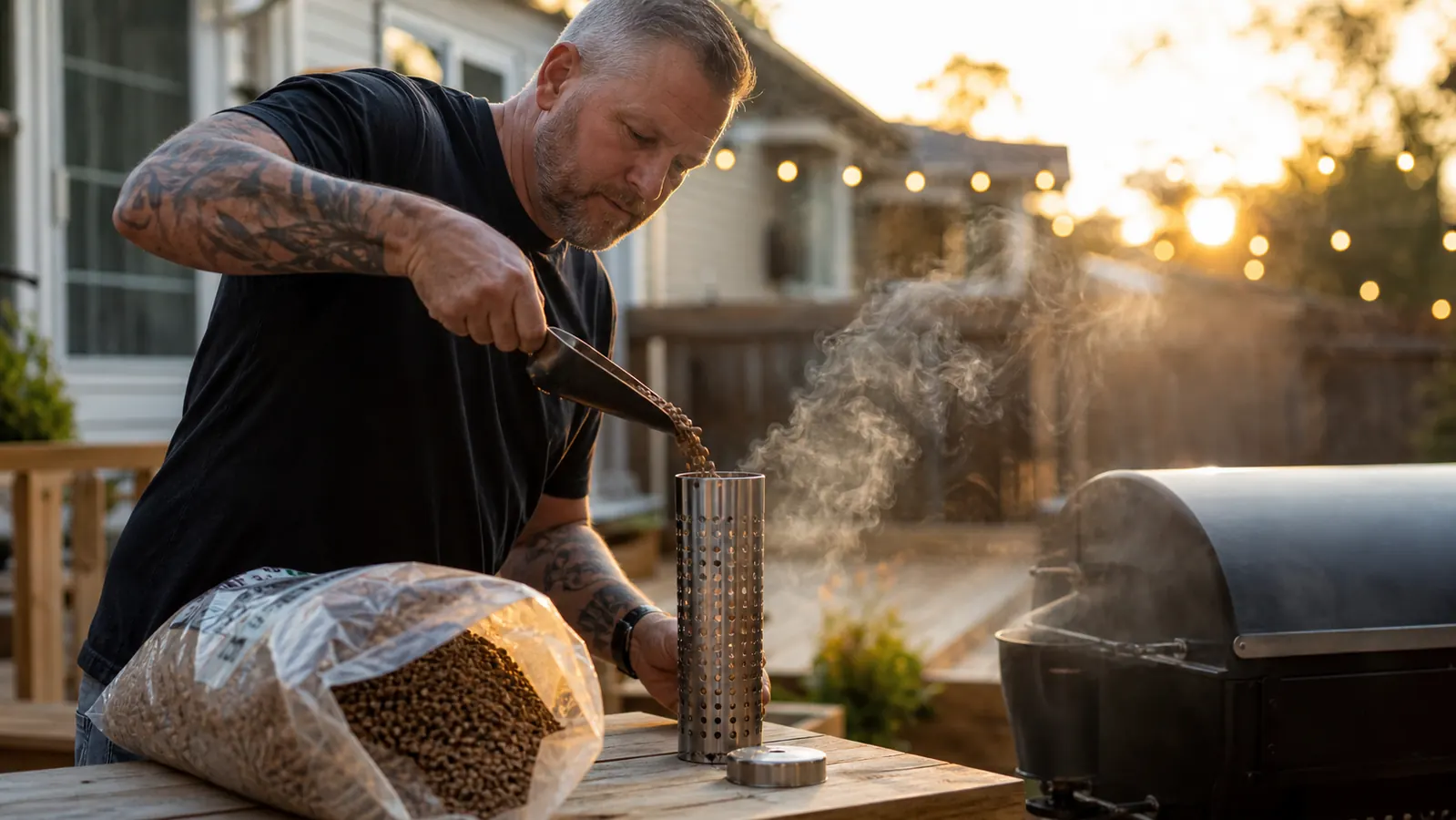
The right wood pellet also depends on how you're burning it, and that's worth thinking through before you buy in bulk. I don't own a pellet grill myself, so most of the time I'm loading a smoker tube with wood pellets and setting it right on the grate of my three-burner gas grill, letting the tube smolder alongside indirect heat for a couple of hours. It's a cheap, low-commitment way to add real smoke flavor to a gas grill without buying a whole new appliance.
When I want a longer, more hands-off cook, like a full pork shoulder for a Sunday table with Bev and the family, I'll borrow Paul's pellet smoker instead, since a hopper-fed unit holds a steadier temperature over many hours than my gas grill and smoker tube combination can. On the rare occasion I go old-school with the charcoal kettle, I'll wrap a handful of the same wood pellets in a foil packet with a few holes poked in the top and set it right on the coals, which gets me a similar smoke profile without needing a separate device at all.
Either way, the same wood pellet quality rules apply. If you're weighing whether a smoker tube setup like mine is enough, or whether it's worth stepping up to a dedicated pellet smoker, I laid out the tradeoffs in more detail in my Traeger versus Camp Chef pellets comparison, which covers burn rate and smoke output side by side.
What Else Helps
A good wood pellet does most of the work, but a few small habits make the results even better. I always let smoked meat rest for at least ten to fifteen minutes before slicing, since the smoke flavor settles into the meat as it cools rather than escaping the second you cut it. I also keep my rubs simple when I'm using a bolder wood like hickory or oak, since a heavy sugar-based rub can fight with a strong smoke instead of complementing it. And Ray, who has zero interest in the grill itself, is always in charge of music during a long smoke. It sounds silly, but a slow cook feels a lot less like a chore with something good playing in the background while the smoke does its thing.
I'd also add, don't be afraid to keep two bags on hand instead of one. I usually have Traeger Signature Blend for everyday cooks and a straight applewood on the shelf for anything delicate, so I'm never stuck using a bold wood on something that really wanted a gentle touch. It costs a little more to keep both stocked, but it means I'm never guessing on a Sunday when the table is already set and everyone's hungry.
The wood pellet you choose does more to shape the final flavor than almost any rub or sauce you'll put on top of it.
Don't let a bad batch of wood pellets ruin a good cook
Once you've matched the wood to the meat and know your setup, the last variable is the pellets themselves. Traeger Signature Blend is the bag I trust for everything from a weeknight chicken to a weekend brisket for the whole family.
Amazon Check Today's Price on Amazon →