
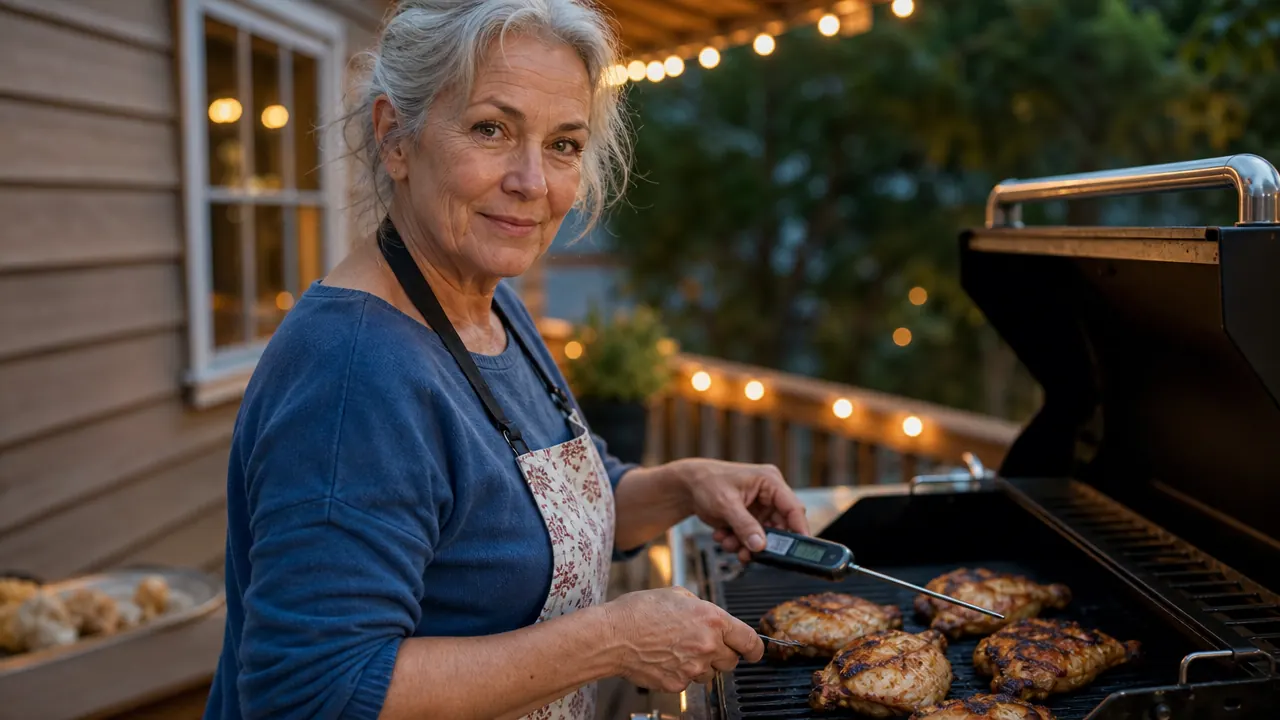
For years I judged doneness the way most people learn it on their parents' patio: press the meat, count the give, hope for the best. Then one Sunday I served my son-in-law Paul a chicken thigh that looked perfectly browned on the outside but was still pink near the bone, and I watched his face go from polite to worried in about two seconds flat. That was the night I stopped guessing. My Alpha Grillers instant read thermometer has lived in the utensil drawer next to the tongs ever since, and it is the single piece of gear that turned my backyard cooking from probably fine into actually right, every single time.
Checking doneness by color, by touch, or by how long something has been sitting on the grill is how good cooks end up serving dry chicken or, worse, meat that is not actually safe to eat. An instant read thermometer removes the guessing entirely. You insert the probe, you wait a couple of seconds, and the number tells you exactly where you stand. My neighbor Bev, who has shown up at my table nearly every Sunday for as long as I can remember, tells people the thermometer is the reason my brisket and my burgers taste the same every time. It is not talent. It is a reliable tool and five steps I follow without fail, on the three-burner gas grill on the deck and on the old charcoal kettle I have had for twenty years.
Stop cutting into meat to guess if it's done
The Alpha Grillers Instant Read Meat Thermometer reads in one to two seconds with a bright backlit display, so you can check doneness without losing heat off the grill or slicing into a roast to peek.
Amazon Check Today's Price on Amazon →Step 1: Know Your Target Temperature Before You Start
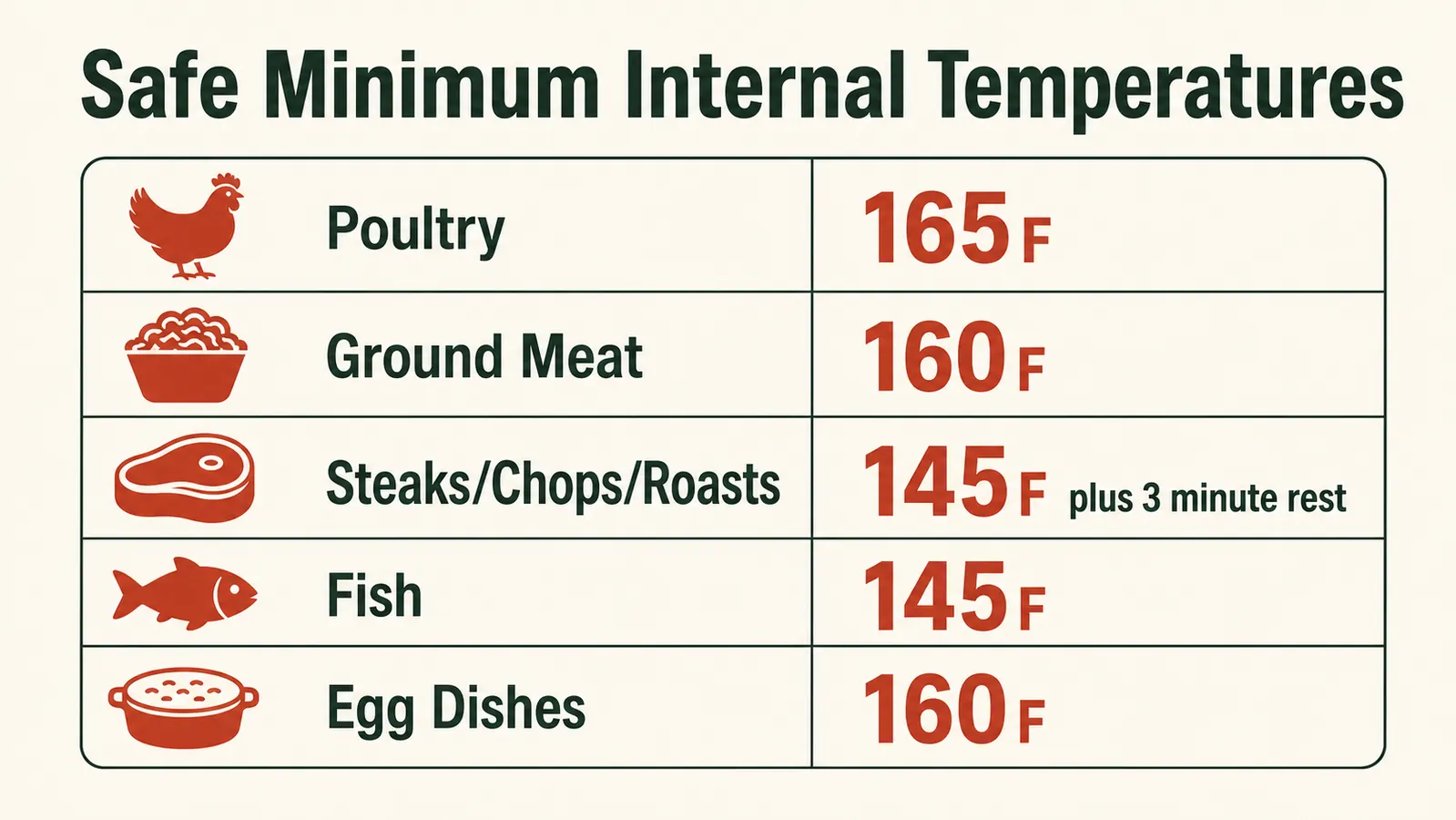
The USDA minimum internal temperatures are non-negotiable, and I still keep them taped inside my spice cabinet even after cooking for going on forty years. Whole poultry and ground poultry need to reach 165°F. Ground beef, ground pork, and ground lamb need 160°F. Beef, pork, lamb, and veal steaks, chops, and roasts are safe at 145°F with a three-minute rest afterward. Fish needs 145°F, and egg dishes like a frittata on the griddle need 160°F. None of that matters if you're just eyeballing the color, which is why the first thing I do before anything touches the grates is decide what number I'm cooking toward.
My grandson Marco is six and thinks the number on the thermometer screen is basically a game, he likes being the one who gets to announce when the chicken hits 165. Sofia, who's nine and a little more particular, wants her steak at exactly 145 and not a degree over. Having a real target for doneness turns cooking from a guessing game into something even the kids can follow, and it keeps everyone at the table eating meat that's actually safe, not just meat that looks done.
The target changes with the cut, not just the animal, and that trips people up more than anything else. Ground meat always needs the higher number, 160°F for beef, pork, and lamb, because grinding spreads any surface bacteria all the way through the patty. A whole muscle cut like a ribeye or a pork chop only needs 145°F because the interior was never exposed. Fish is its own category at 145°F, and it flakes apart at the fork the moment it gets there, so I check it earlier and more often than I check a steak. Knowing which bucket your protein falls into before it hits the grill saves you from either an anxious overcook or an unsafe undercook.
Step 2: Let the Probe Settle Before You Trust the Number
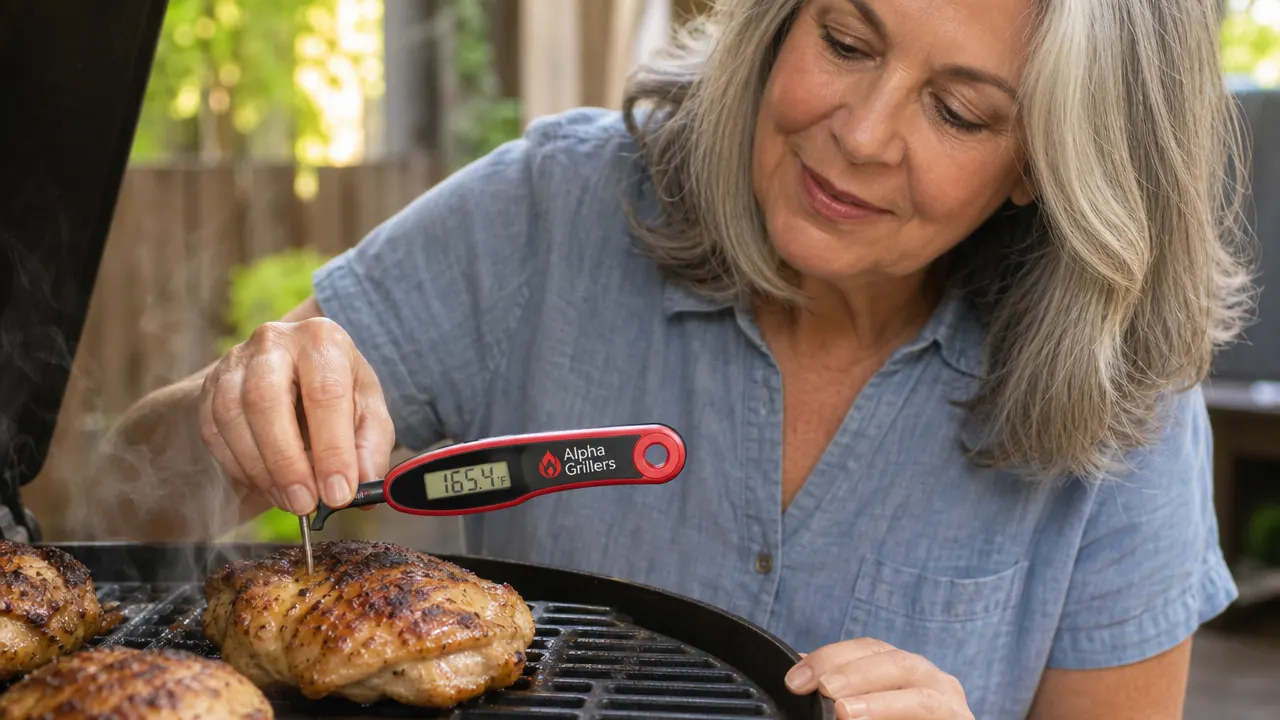
An instant read thermometer needs a moment to settle, even the fast ones. My Alpha Grillers reads in about one to two seconds, which is quick, but I still wait for the number to stop climbing or falling before I call it done. Pull the trigger too early and you'll get a reading that's still catching up to the meat's actual center, and that half-second of impatience is where most backyard doneness mistakes happen. It is pre-calibrated out of the box, so there is no fussing with settings before your first cookout, but the read still needs those extra seconds to land.
Ray thinks I'm fussy about this, but I've watched him pull a roast off the three-burner a full ten degrees under because he read the display the instant the probe went in. Give it the extra two seconds. That's the whole trick, and it costs you nothing.
I also lean on the waterproof build more than I expected to. It's rated IP67, so a sudden rinse under the kitchen faucet between checks, or an evening cookout that gets rained on before Ray manages to get the umbrella up, doesn't put it out of commission. The backlit display matters just as much once the sun goes down behind the hills and I'm still checking a roast at eight o'clock. I don't have to squint or carry a flashlight out to the deck, I just glance at the screen and get my number.
Step 3: Insert the Probe Where It Actually Counts
Placement matters more than the thermometer itself. For a whole chicken, I go into the thickest part of the thigh, angled away from the bone, since bone conducts heat differently and will throw the reading off by several degrees. For a steak or a pork chop, I insert from the side, aiming for the center of the cut rather than the top where the crust has already seared past your target. For burgers, I go in horizontally through the side of the patty instead of straight down, because straight down on something that thin usually just measures the grill grate underneath.
I learned the bone mistake the hard way at one of my daughter Nina's Fourth of July cookouts, reading 165°F on a chicken thigh with the probe resting against bone, only to cut into it later and find pink near the joint. Doneness isn't about hitting a number, it's about hitting the number in the right spot. Now I always test two spots on anything larger than a chop, since grills and ovens alike have hot and cool zones, and a single reading can lie to you if you're unlucky with placement.
My three-burner has a hot zone on the left side where the flame runs a little stronger, something I only figured out after years of cooking on it, and I still test doneness on every single piece when I've got a dozen thighs going for a full table. One piece near the hot burner can hit temperature five minutes before its neighbor on the cooler end, and if I only checked one thigh and called the whole tray done, somebody's plate would come up short. When I'm feeding Nina, Paul, the grandkids, and Bev all at once, checking every piece individually is the only way I trust what lands on the platter.
Step 4: Read It Fast, and Pull Before the Number You Want
This is the part almost nobody tells you: meat keeps cooking after it comes off the heat. It's called carryover cooking, and depending on the size of the cut it can add anywhere from three to ten degrees. So if my target for a pork tenderloin is 145°F, I'm pulling it off the grill around 138 to 140°F, because it's going to climb the rest of the way while it rests. This is where a fast instant read thermometer earns its keep over waiting and guessing, since a quick read lets me check every few minutes without opening the lid and losing heat.
For thick cuts, roasts, whole birds, tri-tip, I check every five to seven minutes as they get close. For thin cuts like chicken breasts or burgers, I start checking a few minutes before I think they're near done, then again right before I plan to pull them. The habit isn't complicated, it's just consistent, and consistency is really the whole game with doneness.
An instant read is a different tool than a leave-in probe thermometer, and I own both for a reason. The leave-in style stays in the meat the whole cook and reports continuously, which is great for a low and slow smoke on the charcoal kettle where I'm not opening the lid much anyway. But for the fast, hands-on rhythm of grilling, quick checks, pull the probe, keep cooking, repeat, an instant read is faster to use and easier to move from one piece to the next. I use the kettle's leave-in probe for an overnight pork shoulder and the Alpha Grillers for pretty much everything else.
Step 5: Rest the Meat, Then Recheck Before You Serve
Resting isn't optional, it's the last step in getting doneness right. A rested steak redistributes its juices instead of losing them all over the cutting board. Roasts and whole chickens need ten to twenty minutes under a loose foil tent. After the rest, I check the temperature one more time with the same thermometer, mostly out of habit at this point, but also because it's satisfying to watch the number land exactly where it should have all along.
This is the step my son-in-law Paul skips when he's cooking, and it's the difference between his burgers and mine even though we use the same grill and the same Alpha Grillers thermometer. He's in a hurry. I'm not. Five extra minutes of patience is free, and the payoff is a juicier plate for everyone at the table.
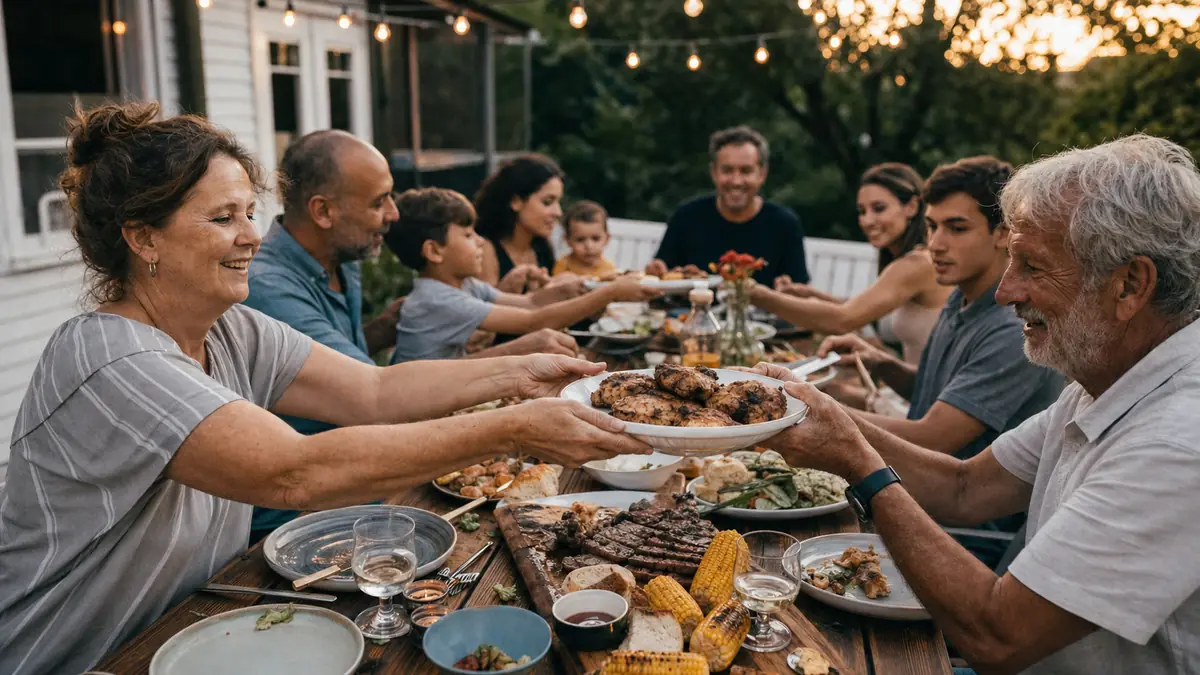
Different cuts rest differently, too. A thin burger patty only needs two or three minutes, while a full tri-tip or a whole chicken wants closer to fifteen. I set mine on a carving board with a groove cut around the edge so the juices have somewhere to go besides the counter, and I use the resting window to plate side dishes and pour drinks, so nobody's standing around waiting on me. By the time Ray has the music going and everyone's seated, the meat has finished its climb to the right number and it's ready to carve.
What Else Helps
A thermometer only works if you trust it, so I test mine in ice water once a season, it should read close to 32°F. I also wipe the probe with a warm soapy cloth between different proteins, since cross contamination doesn't care how accurate your doneness reading is. And I never leave the probe resting on the grate itself between checks, since a hot metal surface will give a false high reading the moment the tip brushes it. If you want the longer story of how this particular thermometer has held up after years of Sunday cookouts, hot tubs of dish water, and one memorable drop off the deck railing, I wrote about that in my long-term review.
The little things add up over a whole grilling season. The probe folds flat against the body when it's not in use, so it goes straight into a drawer instead of poking holes in everything nearby, and the auto shut-off means I've never once found the battery dead when I actually needed a reading. I keep a spare battery in the same drawer anyway, because the one time you don't have one is always the Sunday the whole family shows up. Teaching Sofia and Marco to ask for the thermometer before they ask if dinner is ready has turned food safety into something they just expect, not a rule anyone has to enforce.
Doneness isn't a guess you get better at with practice. It's a number, and the right tool tells you that number in under three seconds.
Five steps only work if the thermometer keeps up
A slow read means you're standing over the grill with the lid up, losing heat while you wait. The Alpha Grillers thermometer's one to two second response is what makes this whole method actually practical on a busy Sunday.
Amazon Check Today's Price on Amazon →